I.Properties of palm oil
Palm oil is the world’s most important vegetable oil. It is extracted from the pulp of the fruit of the oil palm. This tree grows around the equator, in Asia, Africa and Latin America. The pulp is processed into palm oil, whilst the seeds are processed into palm kernel oil. A single fruit contains 90% palm oil and 10% palm kernel oil.
Illustration: Structure of a palm fruit (Source: RSPO)
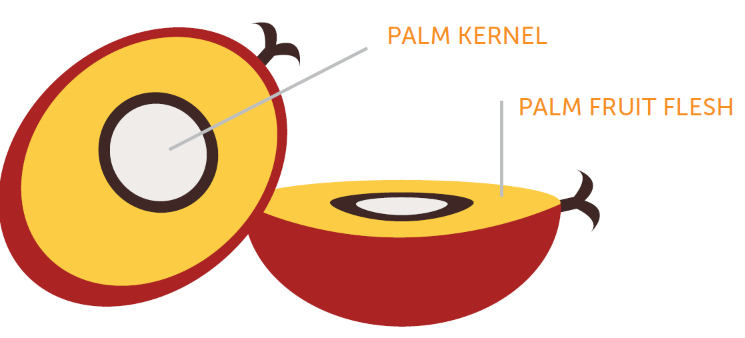
The term ‘palm oil’ refers to the oil extracted from the pulp of the fruit. ‘Palm kernel oil’ is pressed from the kernel of the fruit. It has a different fatty acid profile (more saturated fatty acids) and is used more frequently in cosmetics and cleaning products than in food. Both oils have different technological properties and areas of application.
Illustration: The small orange-red fruits are first sterilised with steam and then pressed to produce crude palm oil (Source: RSPO)
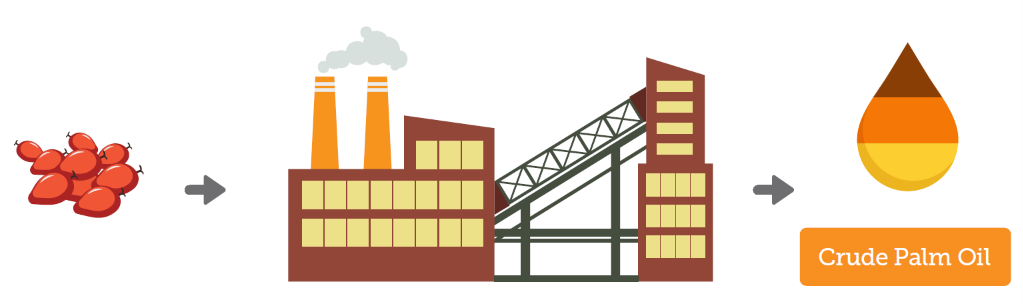
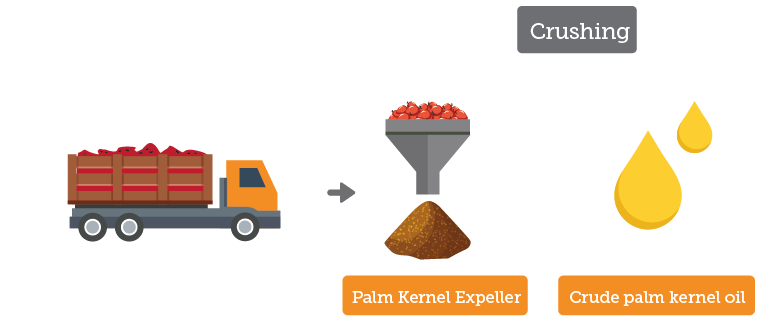
Figure: The palm kernels are cracked and separated from their shells. The kernel is pressed to produce palm kernel oil and palm kernel cake (Source: RSPO)
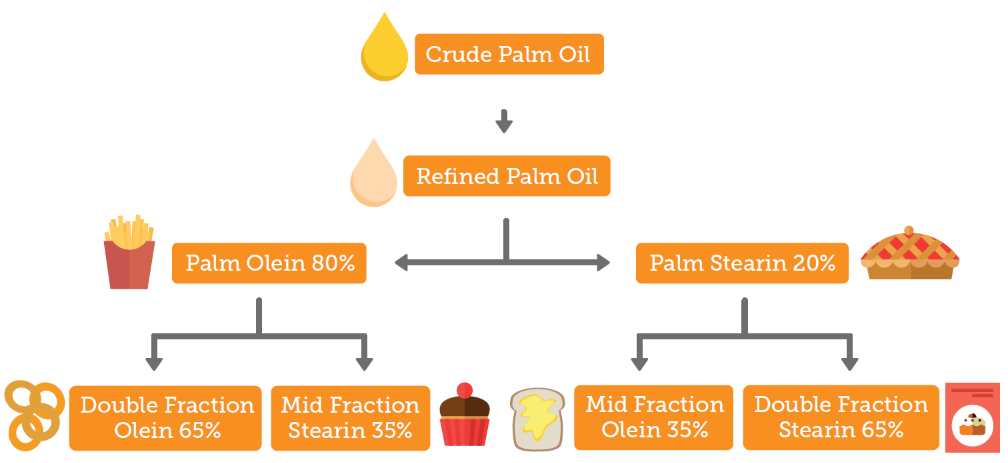
During fractionation, palm oil is broken down into its constituent parts. This process can be repeated to extract several fractions from the raw material.
Palm oil derivatives are produced through further processing following fractionation. Through complex chemical conversion processes, up to 1,000 different derivatives can be produced, which are used, for example, as surfactants or emulsifiers in cosmetics and cleaning products. Derivatives are ingredients for which there are currently few viable alternatives with comparable properties and the same availability.
Figure: During fractionation, the liquid olein is separated from the solid stearin (Source: RSPO)
At room temperature, palm oil is naturally semi-solid, flavourless, heat-stable and has a very long shelf life. These properties make it technologically unique: it does not need to be industrially hydrogenated, a process which, in the case of liquid oils such as rapeseed or sunflower oil, would lead to the formation of trans fats that are harmful to health (Marangoni et al., 2017). It is also highly versatile – from chocolate and baked goods to cosmetics and detergents. Its high oxidative stability extends the shelf life of products and can therefore have a positive impact on food waste.
II. Uses of palm oil
Palm oil and palm kernel oil are used, amongst other things, in:
- foods such as baked goods, chocolate, margarine and ready-made products,
- cosmetics and personal care products,
- detergents and cleaning products,
- pharmaceutical products,
- animal feed and technical applications,
- and, in some cases, biofuels.
The proportion of each application varies depending on the region of the world and the statistics used.
Figure: Consumption of palm oil for individual consumer goods or groups of consumer goods in Germany, 2013 (Source: Auf der Ölspur, WWF Germany, 2016)
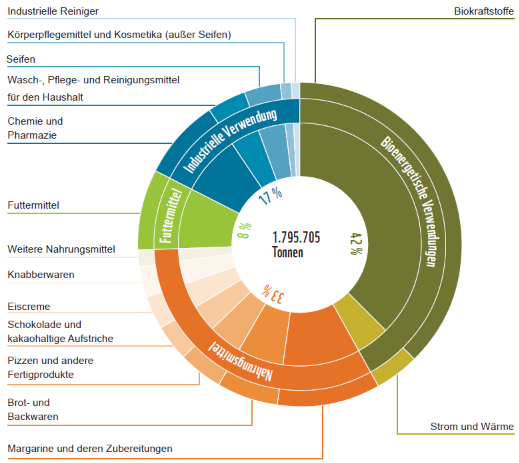
Palm oil contains approximately 50% saturated fatty acids. A high intake of saturated fats is generally associated with an increased risk of cardiovascular disease. Moderate consumption is therefore recommended – though this also applies to butter (66% saturated fatty acids) and coconut oil (92%). Compared with these, palm oil is richer in monounsaturated fatty acids. The health assessment depends heavily on overall dietary patterns and on which fat is being replaced (Marangoni et al., 2017; Mancini et al., 2015).
No, on the contrary: as palm oil is naturally semi-solid, it does not need to be chemically hydrogenated for most applications. The hydrogenation of liquid oils (such as sunflower oil) often produces industrial trans fats, which are considered harmful to health and increase the risk of cardiovascular disease. Avoiding palm oil and replacing it with hydrogenated oils could actually increase the risk of trans fats in products (Marangoni et al., 2017).
Raw, unrefined palm oil (red palm oil) is rich in carotenoids (provitamin A) and tocotrienols (vitamin E), which have antioxidant and potentially neuroprotective properties. However, in its refined state, as is common in Western foods, these substances are largely removed. The main benefit in a food context remains the avoidance of trans fats and the long shelf life, which helps to reduce food waste (Mancini et al., 2015).
III. Production, imports and consumption
Palm oil production rose from 15.2 million tonnes in 1995 to 81.44 million tonnes in 2025. This makes palm oil the most widely produced oil in the world, followed by soya, rapeseed and sunflower oils. (USDA) This increase is due to the growing global population and the rising demand for vegetable fats.
Figure: Vegetable oil production volumes in 2023 (Source: Hannah Ritchie 2021, Palm Oil)
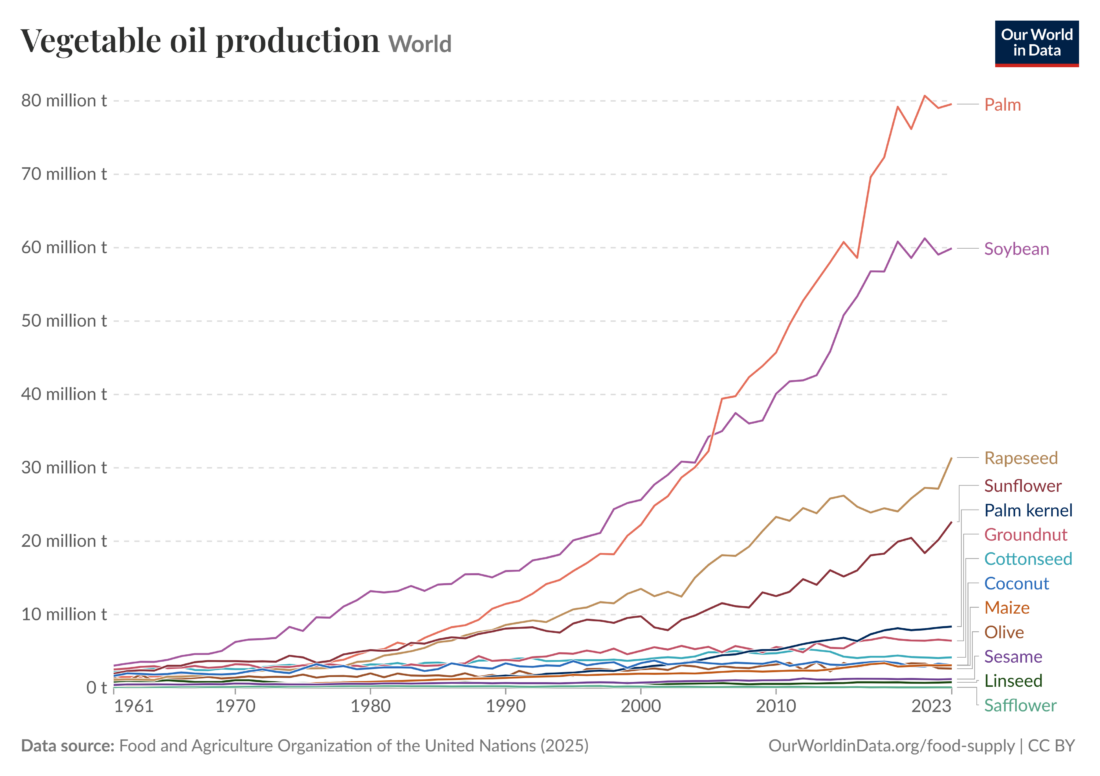
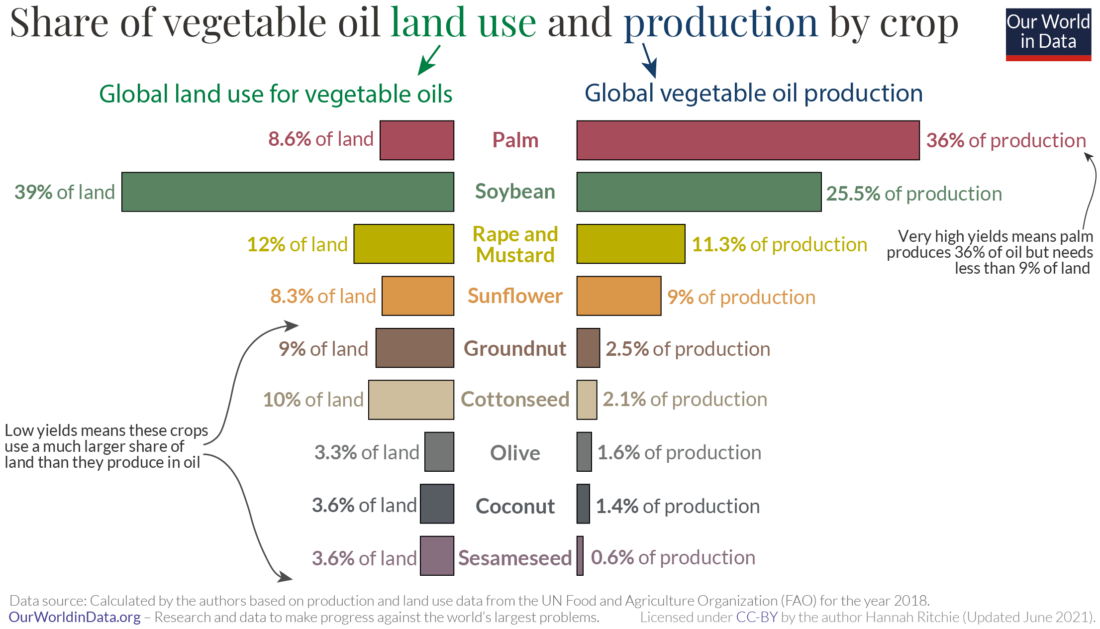
Oil palms grow primarily in the tropical regions of Asia, Africa and Latin America. Oil palms yield significantly more oil per hectare than most other oil crops. Consequently, they generally require less land to produce the same amount of oil than, for example, soya, rapeseed, sunflower or coconut. Oil palms currently account for around 40% of global vegetable oil production on only approximately 5–10% of the global area under cultivation for oil crops, which underlines their exceptional efficiency (Meijaard et al., 2020; IUCN, 2018).
Figure: Shares of global vegetable oil production and the proportion of land use required for this in 2016. (Source: Hannah Ritchie 2021, Palm Oil)
Indonesia and Malaysia together produce around 80% of the world’s palm oil. Other major producers include Thailand, Colombia, Nigeria and, increasingly, countries in Africa and Papua New Guinea. According to the 2024 IUCN report, global demand for vegetable oils continues to rise, with Asia and Africa representing the most important growth markets.
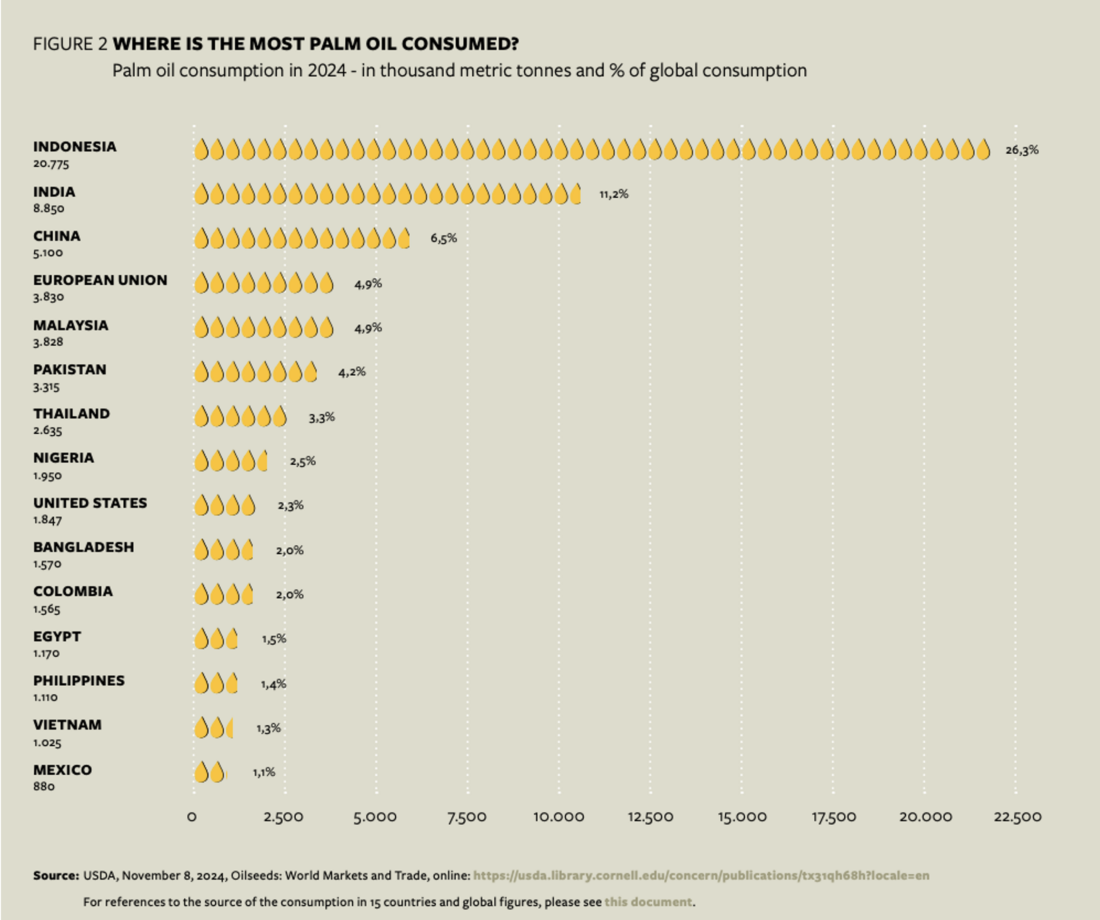
Indonesia, India, China, the EU and Malaysia are the largest consumers, accounting for over 50% of consumption.
Figure: Solidaridad 2025
IV. Imports and consumption in Switzerland
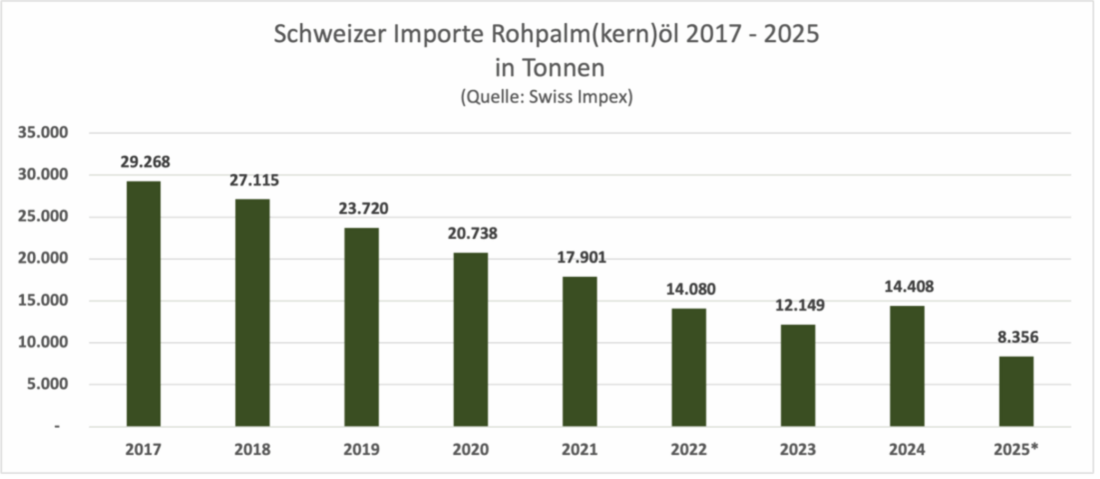
In 2025, Switzerland imported 8,356 tonnes of palm oil and palm kernel oil for the food industry. However, these imports have been declining for many years. Ten years ago, Switzerland’s imports were still many times higher, at around 30,000 tonnes. In 2025, approximately 41.7% of Switzerland’s palm oil imports came from the Solomon Islands, with a further 25.6% from Malaysia. Other countries of origin include the Ivory Coast, Colombia and Madagascar.
According to its own estimates, between 29,000 and 58,000 tonnes of palm oil were consumed in Switzerland. These estimates include both consumption via food and use in products such as cosmetics, detergents, candles and industrial goods. In Switzerland, however, palm oil consumption still accounts for only a small fraction of what countries such as Indonesia or Malaysia consume themselves. Switzerland’s share of global palm oil consumption stands at approximately 0.007%.
No, Swiss production of oilseeds is not sufficient to meet the entire demand for vegetable oils: the self-sufficiency rate for vegetable oils and fats stood at around 24% overall in 2020. Although Swiss agriculture produces a comparatively large amount of rapeseed oil, in 2020 it still only covered around 63% of domestic rapeseed oil consumption. Switzerland therefore remains dependent on imports for all types of oil. https://www.swissstats.bfs.admin.ch/data/webviewer/appId/ch.admin.bfs.swissstat/article/issue220711672200-01/package
In 2020, palm oil accounted for around 12.7 % of Swiss consumption of vegetable oils and fats in the food sector. This made palm oil the third most widely used vegetable oil after sunflower and rapeseed oil. However, this share has been falling for years.
The figure refers to palm oil in the context of food or cooking oil. If all uses of palm oil are taken into account – such as in cosmetics, cleaning products, candles and other non-food products – total consumption is higher and, due to differing calculation methods, is only available as an estimated range.
Around 1/3 – 1/4 of imported palm oil is used in the food supply chain (chocolate, baked goods, ready meals, spreads). 2/3 – 3/4 is used in the non-food industry (cosmetics, cleaning products, medicines).
V. Alternatives
Coconut oil is also solid at room temperature, but the coconut palm is far less productive than oil palms. To produce the same amount of oil, approximately 6 to 10 times more cultivation area would be required. Coconut cultivation often takes place under similarly problematic social and environmental conditions, but is less regulated and certified than palm oil. A switch to coconut oil would increase the pressure on ecosystems in other tropical regions (IUCN, 2018; Meijaard et al., 2020).
No. A palm oil-free product may have been made using soya, rapeseed, sunflower, coconut or other oils. Each of these raw materials carries its own environmental and social risks. For a scientifically sound assessment, at least the cultivation area, origin, risk of deforestation, climate impact, production methods and social conditions should be compared. ‘Palm oil-free’ alone is not sufficient proof of sustainability.
Not necessarily. Palm oil is often replaced by a blend of other oils, which collectively require more land and may originate from regions with a high risk of deforestation (e.g. soya from South America). Furthermore, 'palm oil-free' products may contain more trans fats if the oils have been hydrogenated. The ‘certified palm oil’ label is preferable to ‘palm oil-free’, as it has been shown to contribute to better environmental and social standards than simply avoiding palm oil without distinction (WWF, 2016; Parsons et al., 2020).
Where palm oil or palm kernel oil is used as an ingredient in a foodstuff, it must, in accordance with the provisions of the EDI Ordinance of 16 December 2016 on Food Information (LIV), be listed in the list of ingredients under its specific name, just like all other ingredients (Art. 3(1)(c)). According to Annex 5 of the LIV, refined vegetable oils may be grouped under the category ‘vegetable oils’ or ‘plant oils’, although the individual oils must then be listed. For compound ingredients (which might, for example, also contain palm oil), Annex 5, Part E stipulates that the ingredients of a compound ingredient must also be listed – unless the compound ingredient accounts for less than 2 per cent of the finished product.
Where used in products other than foodstuffs, labelling is not mandatory.
VI. Environment, Climate, Biodiversity
Yes. The area used for palm oil cultivation has increased worldwide since 1970, and indeed this expansion has often been at the expense of tropical forests. It is therefore crucial to ensure that palm oil comes from deforestation-free, traceable and verifiable supply chains. In South-East Asia, studies show that governance, government moratoriums and supply chain commitments such as NDPE can be effective levers (Seymore & Harris 2019; Gaveau et al. 2022; IUCN 2024).
The cultivation of oil palms in monoculture significantly reduces biodiversity compared to primary forest. However, standards such as the RSPO prohibit the clearing of primary forests and areas worthy of protection. The RSPO Impact Report 2024 shows that over 466,000 hectares of forest area have been protected thanks to certification. Furthermore, there are examples of best practice, such as United Plantations, which demonstrate that biodiversity can also be promoted in managed areas through corridors and protected areas. A boycott does not help the animals if it encourages the cultivation of less efficient oil crops over a larger area (Meijaard et al., 2018; RSPO, 2024).
Palm oil is neither more harmful nor more beneficial to the climate than alternative oils. Its carbon footprint depends heavily on production methods. The conversion of peatlands into plantations, for example, releases enormous quantities of CO₂. Best-practice operations such as United Plantations have demonstrated in long-term studies (2004–2023) that measures such as biomass utilisation and zero deforestation can reduce the carbon footprint, and that palm oil-related emissions are lower than those of many competing products (Schmidt et al., 2022; Schmidt et al., 2024/25).
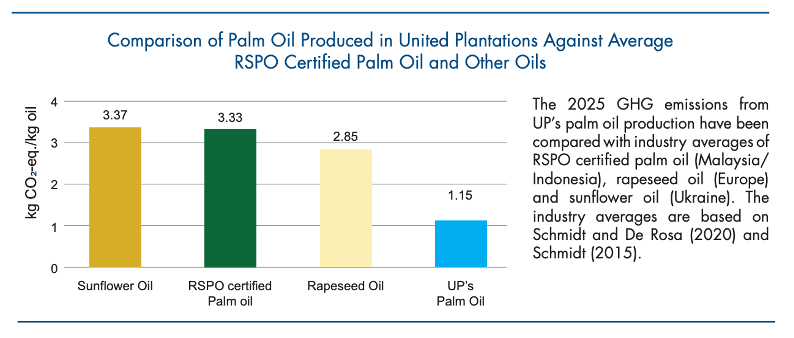
No. Life-cycle assessments show that palm oil can have advantages over alternative crops due to its high yields and lower land requirements. Other oil crops generally require significantly more land to produce the same amount of oil. For example, producing one metric tonne of rapeseed oil requires 4.5 times more land than producing one metric tonne of palm oil.
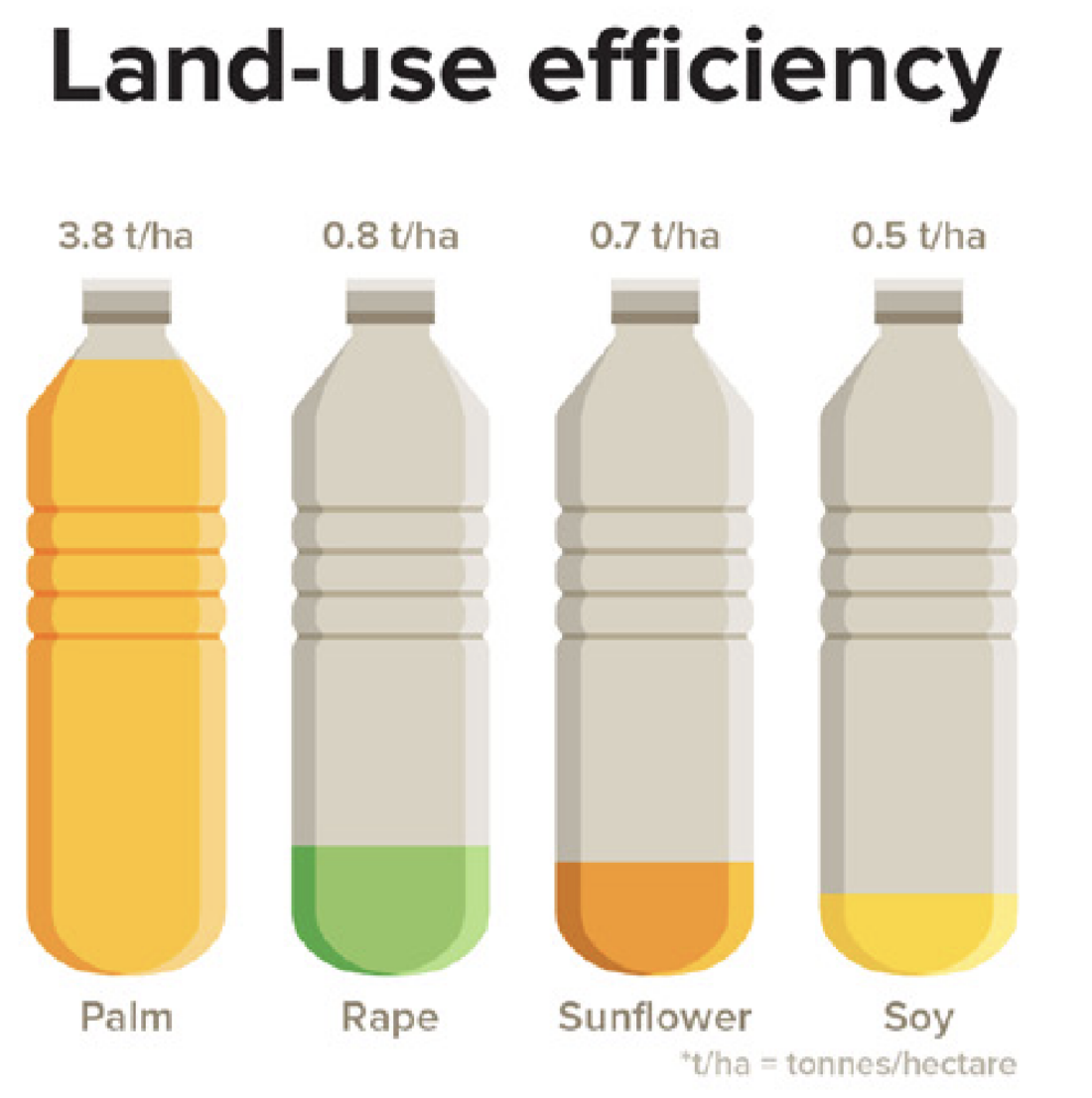
Fig. from IUCN 2018, https://portals.iucn.org/library/sites/library/files/documents/2018-027-En.pdf, page 9
No. Swiss industry has imposed strict voluntary commitments on itself. Part of this commitment is to purchase only RSPO-certified products. A boycott in Switzerland would not eliminate global demand for vegetable oil. Demand could simply shift to other countries of origin or other types of oil. Studies by IDH, the IUCN, the WWF and Nature show that substitution would shift the pressure on land use and biodiversity to other regions. (IDH/CDP 2026, IUCN 2018, Meijaard et al. 2020; IUCN 2024; WWF/UBA 2020/2021). If Swiss demand for certified products is reduced, this may even have the opposite effect. There is a risk that producers and smallholders who invest in certification and traceability will lose market share to suppliers with lower standards. This is against the backdrop that, in recent years, the supply of certified products has already exceeded demand. In this context, IDH warns of a growing divide between strictly regulated markets and less regulated growth markets (the emergence of a two-tier market). IDH, Global Palm Oil Outlook 2025
VII. Social, labour and human rights
Yes, it is a serious problem, particularly in certain regions of Malaysia (e.g. Sabah) and Indonesia. The Malaysian government study (KPK, 2018) estimates the prevalence of forced labour at 0.8 per cent and documents around 33,600 working children aged between 5 and 17, of whom almost 20,000 are in Sabah. The ILO (2024) confirms these figures and is implementing joint programmes with UNICEF and the EU to combat these abuses. The Palmoil Network Switzerland does not downplay these problems, but recognises them as a key challenge requiring further efforts. When it comes to social issues, too, it is crucial that the palm oil traded comes from supply chains with traceability and verifiability and that problems are actively addressed.
Smallholders cultivate around 40% of the global palm oil area. The palm oil boom has demonstrably contributed to poverty reduction in Indonesia and Malaysia and improved access to education (Qaim et al., 2020; Chiriaco, 2022). A boycott of palm oil often hits smallholders first, who are willing to pay for certification but lose market access (Solidaridad, 2022; 2025).
Land conflicts are one of the greatest challenges. Sustainability standards such as the RSPO require compliance with land rights and the principle of ‘Free, Prior and Informed Consent’ (FPIC) with regard to local communities. Breaches can lead to the withdrawal of certification. Nevertheless, conflicts remain a risk that must be addressed through stricter due diligence checks and government governance.
VIII. Certification and standards
The palm oil sector faces major challenges: deforestation, climate impact from peatland use, land conflicts and labour rights violations. Certification systems such as the RSPO set minimum environmental and social standards, which are verified through independent audits. Certification establishes verifiable standards, increases market transparency, provides grievance and sanction mechanisms, and creates incentives for continuous improvement.
The Roundtable on Sustainable Palm Oil (RSPO) is a multi-stakeholder initiative founded in 2004 with the involvement of Swiss stakeholders to develop an industry-wide standard for sustainable palm oil. It is regarded as the strictest and most comprehensive international standard. Benchmarking studies (Walter et al., 2020; 2026) confirm that the RSPO sets higher requirements for forest protection, peatland protection and human rights compared to national standards (such as ISPO or MSPO). For the Swiss food market, RSPO (sometimes in combination with Bio Suisse) is the de facto standard. 100% of the palm oil imported into Switzerland for food use is RSPO-certified.
No. Whilst certification does not solve all problems, studies show measurable improvements in greenhouse gas emissions, land use efficiency and social standards in certified operations compared with conventional ones (Schmidt & De Rosa, 2020; Bok et al., 2022). It would be greenwashing to claim that everything is perfect. The Palm Oil Network’s approach is to promote certified palm oil in order to increase the market share of sustainability and displace non-certified products. Certification is a necessary, though not sufficient, building block that must be supplemented by statutory due diligence obligations (WWF/UBA, 2020).
Independent auditors regularly inspect plantations and mills. In the event of breaches, certificates may be suspended or withdrawn. Furthermore, audit systems are continuously improving (e.g. through unannounced inspections and greater involvement of local stakeholders). An analysis of audit reports by the RSPO (2024) shows a high level of formal compliance with biodiversity criteria (99.1%), although practical implementation must continue to be monitored.
If breaches are identified during audits, depending on the severity and nature of the breach, corrective measures, additional audits, sanctions, suspension or withdrawal of a certificate may be imposed. Furthermore, under the RSPO Complaints System, local communities, NGOs and other stakeholders can lodge formal complaints if they suspect breaches of RSPO rules. An independent Complaints Panel examines the cases and may recommend sanctions.
These terms refer to different supply chain models:
- Identity Preserved (IP): The oil comes from a clearly identified certified source and remains segregated.
- Segregated (SG): Certified oil from various certified sources is blended but remains separate from non-certified oil.
- Mass Balance (MB): Certified and non-certified oil may be physically blended; certified quantities are tracked in the accounts.
- Book and Claim: Certificates are traded separately; the oil physically delivered does not need to be certified.
The model therefore indicates whether a product originates from a certified physical supply chain.
Comparative life cycle assessments (LCA) show measurable benefits:
- Schmidt & De Rosa (2020) and Schmidt et al. (2026) demonstrate that RSPO-certified palm oil reduces greenhouse gas emissions by approximately 35 per cent compared with non-certified oil. The main reasons are higher yields, the avoidance of peatlands and improved wastewater treatment (methane capture).
- Certified farms also exert approximately 20% less pressure on natural ecosystems.
- A systematic review by Harvey et al. (2025) confirms that sustainability certificates such as the RSPO make a significant contribution to the decarbonisation of agricultural supply chains, even though implementation varies by region.
Certification alone does not guarantee perfect conditions, but it provides tools for improvement. RSPO standards explicitly prohibit child labour and forced labour. Audits uncover breaches: an analysis of 97 RSPO audits by 3keel/Profundo (2025) found issues relating to child labour at 7% of farms, demonstrating that inspections are effective but gaps remain. Studies such as Verité (2021) and the CNV Fair Work Monitor (2025/26) show that the situation in certified operations is often better than in non-certified ones, as minimum standards must be met and grievance mechanisms are in place. Without certification, the situation for many workers would often be more precarious.
IX. Free Trade Agreement with Malaysia
It is an Economic Partnership Agreement between the EFTA states and Malaysia. The agreement covers, amongst other things, trade in goods, services, investment, intellectual property and sustainability. It was signed on 23 June 2025 but has not yet entered into force. Signatures are currently being collected for a referendum, meaning that a public vote on the agreement could take place in 2027.
No, the agreement does not provide for unlimited duty-free access for Malaysian palm oil. Switzerland grants Malaysia quantity-limited quotas at slightly reduced, but not completely abolished, customs duties. The tariff preferences are subject to strict sustainability certification and traceability back to the producer. The agreement also contains binding rules on labour rights, as well as on climate, forest protection and biodiversity.
The model provides for five sub-quotas for crude palm oil, palm stearin and palm kernel oil. The total quota starts at 10,000 tonnes and rises to 12,500 tonnes over five years. Within these quotas, customs duties are not abolished, but are reduced by 20%, 30% or 40% depending on the product. The palm oil concessions granted to Malaysia correspond to those in the free trade agreement with Indonesia and were agreed with representatives of the sectors concerned.
The limit is intended to prevent the tariff concessions from leading to an undesirable increase in Swiss palm oil imports, which would put pressure on domestic production of rapeseed and sunflower oil. With the quotas, reduced tariffs and sustainability conditions, Switzerland is taking a different approach to that of a complete tariff exemption.
In addition, Swiss agriculture is safeguarded by a safeguard clause: should the Swiss oilseed market, contrary to expectations, come under pressure, the agreement provides for a safeguard mechanism. This would allow Switzerland to temporarily suspend the tariff concessions granted under the agreed safeguard mechanism.
Tariff concessions apply only to palm oil that can be proven to have sustainability. This means that not all palm oil from Malaysia automatically benefits from tariff reductions. Preferential treatment is only granted if the environmental and social requirements of the agreement are met and verified. These include the protection of forests, peatlands and valuable ecosystems; the fight against deforestation and slash-and-burn clearing; and respect for the rights of workers, migrant workers, indigenous peoples and local communities.
Swiss importers must provide evidence of compliance with these requirements. Furthermore, the five sub-quotas may only be used for imports in 22-tonne tanks; this enables traceability from the Swiss buyer back to the producer.
The agreement does not prescribe any specific standard for sustainability, but sets very high requirements in terms of sustainability. The Malaysian ‘Malaysian Sustainable Palm Oil’ (MSPO) standard is therefore not automatically recognised. SECO commissions an independent comparison of the available certification systems. The Federal Council then sets out in a ordinance which standards are accepted as proof. Recognised standards must involve the relevant stakeholders, be independently audited and regularly assessed for their effectiveness. Switzerland therefore does not rely on self-declarations, but combines contractual criteria with certification, traceability and import controls.
In that case, the goods cannot meet the preferential conditions. The importer would then have to pay the standard customs duties. The customs concession is therefore linked to proof of sustainability and not solely to the country of origin, Malaysia.
No. The agreement provides for strict tariff quotas (a maximum of 12,500 tonnes per year for oil eligible for preferential treatment). This corresponds to only around 0.06% of Malaysia’s total production (approximately 20.2 million tonnes). Experience with the agreement with Indonesia shows that lower tariffs do not automatically lead to higher import volumes, as demand for palm oil in Switzerland is declining and is determined by other factors such as quality and Sustainability.
The agreement is not intended to increase volumes, but to enshrine sustainability standards at the level of international law. Article 12.12 of the agreement explicitly links tariff preferences to criteria such as zero deforestation, the protection of peatlands and compliance with labour rights. If Switzerland were to withdraw, its influence over local production conditions would be weakened, leaving the field open to suppliers with lower standards. The agreement is a tool for contractually enforcing ‘zero deforestation’ and fair working conditions (IDH & CDP, 2026).
No. The agreement provides incentives for sustainable production. Malaysia has legally capped the area under cultivation at 6.5 million hectares (around 5.6 million ha) (https://euractiv.com/de/news/malaysia-will-am-eu-markt-bleiben-und-setzt-auf-nachhaltige-palmoel/).
By linking market access to Sustainability, the agreement rewards producers who protect forests and penalises those who deforest. It is a tool for driving ‘zero deforestation’ in the supply chain and supporting the implementation of NDPE commitments (No Deforestation, No Peat, No Exploitation) (Gaveau et al., 2022; Euractiv, 2026).
Malaysia produced approximately 20,200,000 tonnes of palm oil in 2025. In 2025, Switzerland sourced approximately 2,140 tonnes of palm oil from Malaysia, all of which was 100% RSPO-certified and physically segregated, i.e. merely 0.01% of total Malaysian production. Converted, this quantity corresponds to an area of approximately 610 ha on which the palm oil for Switzerland is produced, based on a conservative yield estimate of 3.5 tonnes per ha. Even if the maximum quota of 12,500 tonnes were to be fully utilised, this would account for only 0.06% of Malaysian production and correspond to a land footprint of 3,600 hectares.
The agreement sends a regulatory signal in favour of the ‘Swiss way’: market access is granted only in return for Sustainability. Even though the quantities are small, the agreement provides planning certainty for businesses and ensures that the same high legal standards apply to all importers.
No. Palm oil and rapeseed oil have different technological properties (solid vs. liquid) and are often not directly interchangeable. Furthermore, the quantities under the agreement are limited. Swiss rapeseed production is supported by other agricultural policy measures. A decline in palm oil imports into Switzerland has not led to an increase in rapeseed production in the past, as global demand for vegetable fats is rising and technological requirements are specific (FiBL, 2019).
Furthermore, Swiss oilseed production is currently insufficient to meet the total demand for vegetable oils: the self-sufficiency rate for vegetable oils and fats stood at only around 24% in 2020.
Furthermore, Swiss agriculture is safeguarded by a safeguard clause: should the Swiss oilseed market, contrary to expectations, come under pressure, the agreement provides for a safeguard mechanism. This would allow Switzerland to temporarily suspend the tariff concessions granted under the agreed safeguard mechanism.
Experience with Indonesia clearly shows that there was no flood of imports and that the predictions and fears of opponents have not materialised. No significant quantities were imported from Indonesia into Switzerland either before or after the agreement came into force. However, following the agreement, Switzerland supported projects through SECO.
This experience shows that a free trade agreement does not automatically lead to increased palm oil imports. Rather, the decisive factors are actual demand, existing supply relationships, quality requirements, sustainability criteria and the availability of certified produce.
X. Palmoil Network Switzerland
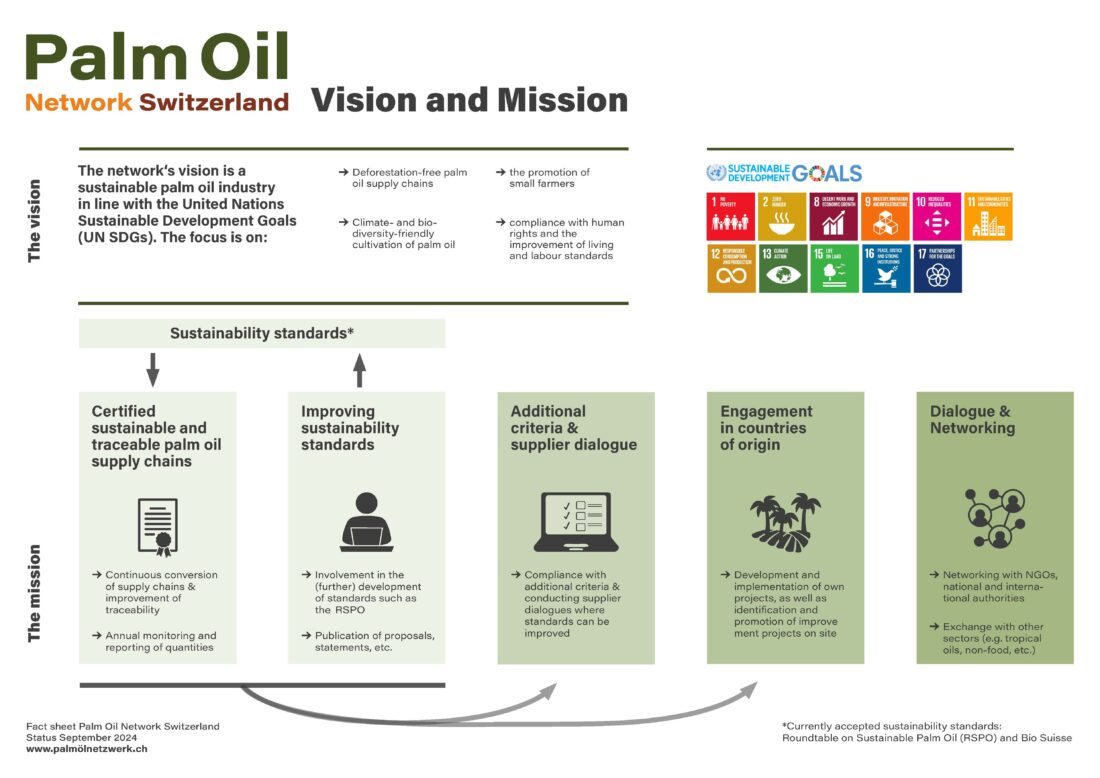
The PNS is an alliance of companies, associations and organisations committed to a sustainable palm oil value chain. Its aim is to improve environmental and social conditions in producing countries through joint dialogue and action. The network pools expertise to achieve greater impact by using a single voice and pooling their resources, rather than acting as individual stakeholders. To this end, the members have signed a memorandum of understanding and a voluntary commitment.
The network aims to further develop the RSPO standard by ensuring 100 per cent RSPO certification for all imports and uses of palm oil, and to support suppliers in going beyond the RSPO requirements through supplier dialogues, additional criteria and projects on the ground.
Download Datasheet "Vision and Mission"
Even with a small market share, Switzerland can act as a pioneer. Swiss companies often operate globally and have influence over international supply chains. Through the PNS and the FTA, Switzerland is sending a clear signal: market access is only granted in return for Sustainability. This ‘Swiss approach’ serves as a model for other markets and helps to raise global standards. Withdrawing would weaken Switzerland’s influence on local production conditions and leave the field to suppliers with lower standards (IDH & CDP, 2026; Walter et al., 2026).
